You pay attention to what you eat. After all, your oral health depends on it. Without the necessary proteins, vitamins, and minerals in your diet, your teeth and gums will suffer. But did you know it’s a two-way street? Without healthy teeth and a healthy bite, your digestive system can suffer as well.
Because digestion doesn’t start in your stomach—it starts in your mouth! Let’s take a quick look at how the digestive system operates.
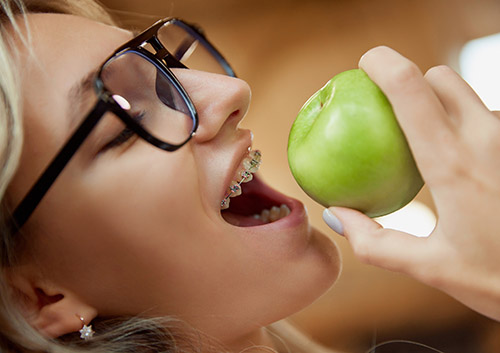
The first step in digesting is breaking down foods so your body can extract their nutrients more easily. Healthy teeth are essential here. Incisors and canines tear food into smaller pieces while molars grind these pieces into an easy-to-swallow, paste-like consistency. While we chew, the surface area of the food increases, allowing the digestive enzymes in saliva, the stomach, and the small intestine to work more efficiently.
Saliva production increases when we eat. Digestive enzymes in saliva begin breaking down carbs into sugars, and separating fat molecules. Saliva also contains antimicrobial peptides which are important for oral and gut health.
This muscular tube connects the back of the throat to the stomach. As we swallow, muscles in the esophagus contract and relax, an involuntary movement called peristalsis. These contractions push food down into the stomach. Peristalsis also occurs in the stomach and intestines, efficiently moving food through the rest of the digestive system.
Inside the stomach are gastric acids and enzymes which break food down further to help the small intestine make use of these nutrients in the next stage of digestion.
This organ works to reap the benefits of our healthy diets. The small intestine absorbs about 95% of the nutrients from our digested food—carbohydrates, proteins, fat, vitamins, and minerals—and transfers these nutrients to the circulatory system to be used throughout the body. Any remaining food particles travel to the colon, or large intestine.
Bacteria in the large intestine help process soluble fiber, which we can’t digest on our own. The large intestine is also where insoluble fiber and anything else undigested are converted to solid waste.
Now, let’s look at how a malocclusion, or bad bite, can disrupt the digestive process.
In some cases, malocclusions are mild, and require little or no treatment. A more serious malocclusion, though, can impact the way the jaws fit together, making it difficult or impossible for the jaws and teeth to align correctly for efficient and comfortable chewing. What are some possible consequences?
With a healthy bite, your teeth and jaws fit together properly to let you get the most out of your meal. When teeth and jaws don’t meet properly, it’s hard to chew food into the paste-like consistency necessary for rest of our system to process it smoothly.
- Reduction in digestive enzymes and peptides
Difficulty chewing means less chewing. Less chewing means less saliva, and your system won’t benefit from the digestive prep work and gut protection which saliva typically provides.
Insufficiently chewed food makes peristalsis in the throat and other digestive organs more difficult. Larger pieces of food can become stuck in the esophagus, causing painful swallowing or even choking.
- Higher risk of stomach problems
When food isn’t chewed thoroughly, the stomach has to work harder, and the risk of gastroesophageal reflux increases. Highly acidic gastric juices can back up into the esophagus and mouth, causing heartburn, chest pain, sore throat, and vomiting.
When food particles are too large, the small intestine must work harder to break them down and to absorb their nutrients. Insufficiently digested food can also upset the bacterial balance in the large intestine. These problems can cause indigestion, constipation, gas, and bloating.
Orthodontic problems can also lead to nutritional imbalances even before we start to digest. Soft foods and liquids are often chosen over proteins, fruits, and vegetables when chewing pain is a regular occurrence. While a soft diet is fine for a few days if your mouth is a bit sore following an orthodontic or dental treatment, it can be difficult to get the all the nutrients your body needs when you only eat soft foods.
Orthodontic treatment has many well-known benefits. Straighter teeth. A comfortable, functional bite. Increased self-confidence. Let’s add one more benefit to that list—making sure your digestive system gets off to a great start!
The team at Joel Martinez, DDS in McAllen recommends an orthodontic evaluation for children around the age of seven, because finding malocclusions early makes it easier to correct them. But if you’re an adult, don’t settle for painful chewing and an increased risk of digestive problems. Talk to Dr. Joel Martinez, Dr. Christopher Martinez, and Dr. Vanessa Martinez to learn how orthodontic treatment can give you an attractive, functional smile. Your healthy smile—and your healthy body—will thank you!