Our Blog

What is a palatal expander?

August 11th, 2021

If Dr. Joel Martinez, Dr. Christopher Martinez, and Dr. Vanessa Martinez and our team at Joel Martinez, DDS have recommended a palatal expander, you might be wondering what it is and how it will help you. A palatal expander is a small appliance fitted in your mouth to create a wider space in the upper jaw. It is often used when there is a problem with overcrowding of the teeth or when the upper and lower molars don’t fit together correctly. While it is most commonly used in children, some teens and adults may also need a palatal expander.

Reasons to get a palatal expander

There are several reasons you might need to get a palatal expander:

  • Insufficient room for permanent teeth currently erupting
  • Insufficient space for permanent teeth still developing which might need extraction in the future
  • A back crossbite with a narrow upper arch
  • A front crossbite with a narrow upper arch

How long will you need the palatal expander?

On average, patients have the palatal expander for four to seven months, although this is based on the individual and the amount of correction needed. Several months are needed to allow the bone to form and move to the desired width. It is not removable and must remain in the mouth for the entire time.

Does it prevent the necessity for braces?

The palatal expander doesn’t necessarily remove the need for braces in the future, but it can in some cases. Some people only need braces because of a crossbite or overcrowding of the teeth, which a palatal expander can help correct during childhood, when teeth are just beginning to erupt. However, others may eventually need braces if, once all their permanent teeth come in, they have grown in crookedly or with additional spaces between.

If you think your child could benefit from a palatal expander, or want to learn about your own orthodontic treatment options, please feel free to contact our McAllen office!

What is a water pick and do I need one?

July 28th, 2021

Water picks, sometimes called “oral irrigators,” make an excellent addition to your regular home care regimen of brushing and flossing. Especially helpful to those who suffer from periodontal disease and those patients of ours undergoing orthodontic treatment with full-bracketed braces, water picks use powerful tiny bursts of water to dislodge food scraps, bacteria, and other debris nestled in the crevices of your mouth. Children undergoing orthodontic treatment may find using a water pick is beneficial if their toothbrush bristles tend to get caught on their wires or brackets.

When you use a water pick, you’re not only dislodging any particles or debris and bacteria you might have missed when brushing, you are also gently massaging the gums, which helps promote blood flow in the gums and keeps them healthy. While water picks are an excellent addition to your daily fight against gingivitis and other periodontal diseases, they are incapable of fully removing plaque, which is why Dr. Joel Martinez, Dr. Christopher Martinez, and Dr. Vanessa Martinez and our team at Joel Martinez, DDS want to remind you to keep brushing and flossing every day.

If you have sensitive teeth or gums and find it uncomfortable to floss daily, water picks are a good alternative to reduce discomfort while effectively cleaning between teeth. Diabetics sometimes prefer water picks to flossing because they don't cause bleeding of the gums, which can be a problem with floss. If you have a permanent bridge, crowns, or other dental restoration, you may find that a water pick helps you keep the area around the restorations clean.

So how do you choose the right water pick?

Water picks are available for home or portable use. The home versions tend to be larger and use standard electrical outlets, while portable models use batteries. Aside from the size difference, they work in the same manner, both using pulsating water streams. A more crucial difference between water picks is the ability to adjust the pressure. Most home models will let you choose from several pressure settings, depending on how sensitive your teeth and gums are. Most portable models have only one pressure setting. If you want to use mouthwash or a dental rinse in your water pick, check the label first; some models suggest using water only.

Please give us a call at our McAllen office if you have any questions about water picks, or ask Dr. Joel Martinez, Dr. Christopher Martinez, and Dr. Vanessa Martinez during your next visit!

Protecting Your Smile with Mouthguards

July 21st, 2021

If you participate in sports or other physical activities, it’s wise to consider getting a mouthguard. Also known as mouth protectors, mouthguards are a device worn over the teeth to lessen the impact of a blow to the face.

This reduces the chance that you might lose teeth or sustain other serious oral injuries. We recommend that all patients involved in a contact sport such as wrestling, football, or hockey wear a mouthguard because of the high risk of such injuries.

However, anyone involved in a physically demanding sport or activity should wear a mouthguard as well.

Can you imagine what it would be like to lose a few of your front teeth? The way you talk, eat, and smile would all change. Potential injuries when you don’t wear a mouthguard include chipped and broken teeth, fractured jaws, root damage, damage to crowns and bridgework, concussions, and/or injury to the lips, cheeks, or gums.

Types of Mouthguards

There are three different types of mouthguards — typically made of a soft plastic material or laminate. You can decide which works best for you in terms of budget, fit, and comfort.

  • Stock mouthguards are prefabricated to a standard size. They offer adequate protection, but you need to make sure you find one that fits properly and comfortably. Stock mouthguards are readily available at department stores, sporting goods stores, and online.
  • Boil-and-bite mouthguards are placed in boiling water to soften them, then into the mouth so they can conform to the shape of the teeth. Boil-and-bite mouthguards are more expensive, but offer a more customized fit than stock ones. You can find these in department stores, pharmacies, sporting goods stores, and online.
  • Custom-made mouthguards are created just for you by Dr. Joel Martinez, Dr. Christopher Martinez, and Dr. Vanessa Martinez. These offer the best fit and comfort of all the options, but they are also the most expensive. Ask a member of our McAllen team for more information.

The American Dental Association says a good mouthguard should be easy to clean, fit properly, be comfortable, and resist tearing or damage. It shouldn’t restrict speech or breathing.

Still not sure if you need a mouthguard or which kind is right for you? Ask Dr. Joel Martinez, Dr. Christopher Martinez, and Dr. Vanessa Martinez or one of our staff members for more information.

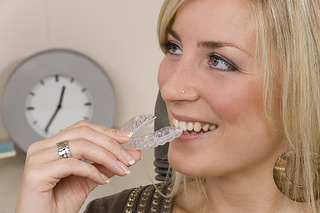
Helpful Retainer Habits

July 14th, 2021

We’ve probably all seen that unhappy kid or frazzled parent sifting through trash for a lost retainer. If we’re really unlucky, we might have been that unhappy kid or frazzled parent sifting through the unpleasant remains of third period lunch hour. But getting tossed isn’t the only risk these appliances face. Read on for ways to keep your retainer (and your parent!) happy.

  • Keep Your Retainer With You

Always carry a retainer case. If you automatically put your retainer in its case when you’re eating, you are much more likely to remember it then if it has been wrapped up in a napkin on your lunch tray. And, if the worst happens, much more likely to recover it in one piece.

Choose the brightest colored case you can live with, so you will have an easier time locating it if need be, and discuss how to label the case to get it back safely to you--just in case.

  • Keep Your Retainer Intact

You might think if you put your retainer in your backpack, or purse, or saxophone case, or athletic bag, it will be safe. It will not. Retainers are designed to be tough enough for everyday wear, but being tossed on the floor while inside a backpack is not everyday wear. Always put your retainer back in its (brightly colored) case before packing it away.

Retainers can warp if they are exposed to heat, so keep them away from potential heat sources like stoves, microwaves, and washers and dryers. Even your car dashboard can become hot enough to warp your retainer. And never use boiling water to clean them.

Finally, your dog might find your retainer to be the #bestchewtoyever, so be sure to put it in a spot pets can’t reach when you’re not wearing it.

  • Keep Your Retainer Clean

Just like plaque can build up on your teeth, minerals and calcium can build up on your retainer. Different types of retainers require different cleaning methods, so talk to Dr. Joel Martinez, Dr. Christopher Martinez, and Dr. Vanessa Martinez about how to keep your retainer clean and bacteria-free. We will be happy to give you instructions on the best way to take care of your particular appliance. And don’t forget to clean your case regularly!

Accidents will happen, of course. If your retainer is lost or damaged, call our McAllen office as soon as possible. We might be able to fix minor damage, and, if needed, we can replace a lost retainer quickly.

Your time in braces is over, but your teeth are still stabilizing in their new, healthy positions. Wearing your retainer regularly is the final step in producing the beautiful smile you’ve worked so hard for. Keep your retainer clean, keep it safe, and keep it with you, and you can enjoy that smile now and for years to come!

Home About Us For New Patients Orthodontic Treatments Wearing Braces About Orthodontics Contact Us Site Map