Our Blog

Gum Disease Awareness

May 28th, 2025

February is Gum Disease Awareness month, a timely reminder that preventing gum disease is one of the best ways to protect our oral health. 

Gum disease is easily treated in its earliest stages. Left untreated, the progressive nature of gum disease makes it one of the leading causes of tooth loss in adults. 

And while we often think of gum disease as an older person’s disease, the fact is that teens and young adults can suffer from gum disease, too. Irregular brushing and flossing habits, hormone fluctuations, family history, and even orthodontic treatment can make people of any age more vulnerable to gum disease.

Let’s take a moment in this shortest month of the year to discuss how understanding, treating, and, above all, preventing gum disease can help us enjoy long-lasting healthy smiles.

How Gum Disease Develops

Gingivitis is the first, mild stage of gum disease. 

  • Gingivitis begins with plaque. 
  • Plaque irritates gum tissue, causing inflammation, which is the body’s reaction to injury or infection. 
  • Typical symptoms include gums which are swollen or red. The gums might feel tender or bleed easily when you brush or floss. You could develop persistent bad breath. 

With proper care, gingivitis is reversible. Because gingivitis symptoms can be very mild, they’re sometimes overlooked. That’s why it’s important to keep up with regular checkups to discover and treat the disease in its earliest stages. 

Periodontitis is a serious gum disease which is destructive to the structures which support our teeth: gums, connective tissue, and bone. 

  • Plaque, when it’s not removed, hardens into tartar, which can form on the tooth above and below the gumline. 
  • The gums pull away from plaque and tartar deposits, creating a space between the gum tissue and tooth roots. 
  • As the gums continue to recede, pockets form between the teeth and gums.
  • Infection-causing oral bacteria thrive in these pockets. Gum infections can lead to painful abscesses—but gum disease is not just an infection.
  • The body normally responds to bacterial infection with inflammation. With periodontitis, this inflammation becomes destructive chronic inflammation. 
  • Over time, chronic inflammation and infection break down the gum tissue, bone, and connective tissue holding teeth in place. Teeth become loose or shift out of alignment.

The tooth’s support structure eventually becomes so compromised that extraction is the only option. That’s why prompt treatment is essential.

Treating Gum Disease

Several options are available to treat gum disease, depending on its severity.

Treatment for gingivitis can be as simple as paying more careful attention to your brushing and flossing and, if necessary, seeing your dentist for a professional cleaning. In some cases, your dentist might recommend an antimicrobial mouthwash or rinse.

Periodontitis requires specialized treatment from your dentist or periodontist, and this treatment will be based on how advanced the condition is:

  • Topical, oral, or time-release medications treat infection.
  • Non-surgical deep cleaning procedures called scaling and root planing remove plaque and tartar above and below the gumline, allowing gum tissue to reattach to the tooth. 
  • Flap surgery treats more advanced gum infection by reducing pocket depth and re-securing the gums snugly around the teeth.
  • If needed, bone grafts, gum grafts, and other regenerative procedures are available which help repair and restore damaged tissue.

Preventing Gum Disease

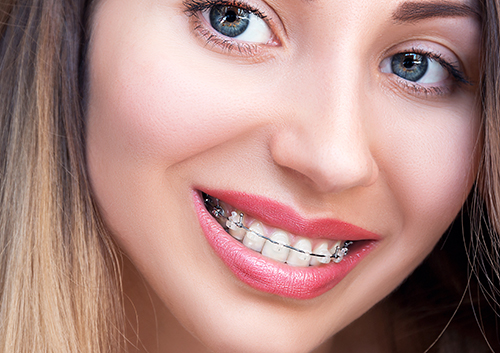
What many people aren’t aware of is just how preventable gum disease is! Because wearing braces can make brushing and flossing more challenging, it’s especially important during these months to stay on top of your dental hygiene and be on the lookout for signs of gingivitis.

  • Brush twice a day for two minutes each time, after every meal, or more often if your orthodontist recommends it. 
    • Use proper brushing technique, angling your brush toward the gums to gently clean around and below the gum line. Be sure to brush around your brackets and under your wires. Use a soft-bristled brush to protect both gum tissue and tooth enamel.
  • Floss once each day, after every meal, or as directed by Dr. Joel Martinez, Dr. Christopher Martinez, and Dr. Vanessa Martinez. 
  • There are specialized brushes and flossers available to make cleaning around brackets and wires much easier. Electric toothbrushes and water flossers can also be helpful in removing hard-to-reach plaque. Ask Dr. Joel Martinez, Dr. Christopher Martinez, and Dr. Vanessa Martinez to recommend the flossing tools and techniques which will work best for you.
  • See your dentist regularly. Gum disease can be invisible in its beginning stages. Discovered early, treatment is simple and effective. 
  • Having your teeth cleaned every six months, or as recommended, will remove tartar buildup which brushing alone can’t handle. 

Your dental hygienist is experienced in cleaning teeth when patients wear braces. And you can get tips for better brushing and flossing techniques from the team at Joel Martinez, DDS in McAllen, too!

Even when it seems like there aren’t enough days in the month or hours in the day, it takes just a few minutes daily to care for your gums and teeth. And when you’re aware of just how much those few minutes mean to a healthy smile, it’s time well spent!

Dental Adulting

May 24th, 2025

Now that you’re entering the working world, or heading off to college, or pursuing any of the many adventures awaiting you in adult life, you’re ready to take on more adult responsibilities. And one of those responsibilities is making sure you maintain your dental health.  

Luckily, it’s not that hard! Successful adulting often means simply making small proactive choices which add up to big long-term benefits. So, let’s look at a few of the everyday habits of dentally successful adults.

Choose a Healthy Lifestyle

  • Eat well.

Just like the rest of our bodies, our teeth and gums need a healthy diet to thrive. Sugar-fueled study sessions and energy drink-filled work hours should be the rare exception, not the norm. A diet rich in vitamins and minerals keeps gums healthy and enamel strong.

  • Don’t use tobacco products. 

Cigarettes, cigars, pipe smoking, chewing tobacco—any form of tobacco products, especially combined with alcohol use, can greatly increase your chances of developing mouth and throat cancers.

  • Talk to your doctor about the HPV vaccine.

HPV (human papillomavirus) can also cause mouth and throat cancers. The American Academy of Pediatrics recommends the HPV vaccine for kids ages 9 through 12. If you haven’t been vaccinated yet, talk to Dr. Joel Martinez, Dr. Christopher Martinez, and Dr. Vanessa Martinez about the potential benefits of the HPV vaccine. 

Practice Good Oral Hygiene

  • Brush at least twice a day, for two minutes each time. 

Plaque begins to build up within hours after your last brushing. Removing plaque morning and evening also removes the cavity-causing bacteria which live in plaque. These bacteria erode enamel and lead to cavities.

  • Floss at least once a day. 

Flossing helps remove plaque from your gumline. When plaque accumulates over time, it becomes tartar, a substance so hard that you’ll need a dental professional to remove it. The bacteria in plaque and tartar irritate your gums, and this irritation is the beginning of gum disease. Early stage gum disease (gingivitis) can often be reversed with better brushing and flossing habits—but, even better, help stop gum disease before it starts with daily flossing.

  • See your dentist regularly. 

If you’ve had the same dentist since childhood, you’ve probably developed a great partnership, typically visiting your dentist twice each year for an exam and a professional cleaning. 

Make sure you make space in your busy adult life to keep your smile its healthy, sparkling best by continuing to schedule regular cleanings and exams. This is the best way to clean away any plaque or tartar you may have missed, and, most important, to catch any small problems before they become bigger ones. 

Keep Up with Your Orthodontic Care

If you’ve spent several of your teen years in braces or aligners creating a beautiful, healthy smile, you don’t want to see all your hard work go to waste. Retainers are designed to make sure your teeth stay just where they belong for a lifetime. 

When retainers aren’t worn as directed, especially when braces or aligners first come off, the teeth can shift back to their old positions. Sometimes going back to your regular retainer schedule can fix any minor movement, but sometimes patients need to go back for repeat orthodontic treatment.

How to avoid orthodontic do-overs?

  • If you have a retainer, wear it as scheduled to maintain your alignment and healthy bite. 
  • Put your retainer in a case when you’re not wearing it. A bent or broken retainer won’t keep your teeth aligned properly and can damage delicate oral tissues!
  • If your retainer is damaged, see the dental team at Joel Martinez, DDS in McAllen ASAP for repair or replacement.

Not so difficult, right? In fact, you’ve probably adopted most of these healthy habits already. Take charge of your dental health now, make good habits a part of your daily routine, and you’ll be prepared to enjoy a lifetime of healthy, attractive, adult smiles!


Toothpaste Guide

May 23rd, 2025

Between the huge number of toothpaste brands on the market today, the different flavors, and claims from most to do different things, it isn’t surprising that people feel so confused when it comes to something that should be as simple as buying a tube of toothpaste. This guide will help you identify the common ingredients in toothpaste, and help you understand the important factors to consider before buying toothpaste again.

Toothpaste comes in gel, paste, and powdered forms. When it comes to the type of toothpaste, the choice is more a matter of preference.

Basic Ingredients

  • Abrasive Agents – Abrasive agents are the scratchy substances added to toothpastes to help in the removal of food particles, bacteria, and minor stains. Calcium carbonate is one of many abrasive materials, and arguably the most common.
  • Flavor – When toothpastes are flavored, they almost always have artificial sweeteners to enhance the flavor of the toothpaste and increase the likelihood that you’ll use it. Flavors run the gamut from traditional mint to cinnamon that may appeal to adults, and bubble gum or lemon lime – flavors to target children.
  • Humectants – Humectants are moisturizing agents that keep paste and gel toothpastes from drying out. Glycerol is commonly used as a humectant.
  • Thickeners – Thickeners are used to give toothpaste its distinctive consistency, and to make it maintain a uniform consistency and come out of the tube easily.
  • Detergents – Sodium lauryl sulfate is the most common detergent used in products that foam up, like toothpaste does in your mouth.

What to Look For in Toothpaste

Fluoride is naturally occurring mineral. It is the most important ingredient to look for in a toothpaste. Although there are people who argue against using fluoride toothpaste, dental professionals like Dr. Joel Martinez, Dr. Christopher Martinez, and Dr. Vanessa Martinez emphasize that the fact that the incidence of tooth decay has decreased so significantly in the past 50 years is because of fluoridated toothpaste.

The suggestion that fluoridated water gives you enough fluoride to protect your teeth is wrong. Fluoride toothpaste is the best cavity protection there is. In addition to strengthening tooth enamel and protecting teeth from acid erosion (from acidic foods and drinks,) it remineralizes the surfaces of teeth that are suffering from early acid damage and may prevent developing tooth decay from worsening.

Tartar Control

Tartar is the result of hardened plaque buildup on the teeth. Good oral hygiene and in between twice yearly cleanings from a dental hygienist are the best defense against plaque buildup. Plaque turns to tartar when people neglect their oral hygiene. Over time, tartar can build up on teeth and under the gums, increasing the risk of gum disease.

Your best bet is to use a toothpaste that has a combination of anti-plaque agents. Products containing more than one plaque reducer may be more effective than products that only one. Common ingredients to look for are zinc citrate or pyrophosphates. Triclosan is an antibiotic that is believed to kill bacteria in the mouth, and it can be found in some anti-plaque toothpaste.

Look for toothpaste that bears the seal of the American Dental Association. That seal is an endorsement of the ADA – and it means that many dentists agree that that particular toothpaste does what toothpaste is designed to do. We can also recommend toothpaste to meet your specific oral health concerns at your next visit to our McAllen office.

When Extraction Is Your Best Option

May 7th, 2025

Orthodontists and dentists use advanced procedures to treat and save teeth. But sometimes, a tooth just can’t be saved and needs to be extracted. Sometimes it’s due to extensive decay, or infection, or serious injury. Or sometimes, to create a healthy bite, an extraction is necessary during orthodontic treatment.

When does an orthodontist recommend an extraction? Conditions which call for extraction include:

  • Incoming Wisdom Teeth

Not many people have enough space in their mouths for four wisdom teeth! And when there’s no room to erupt properly, wisdom teeth can become decayed or infected, push your other teeth out of place, and damage the roots of nearby molars. Extracting wisdom teeth protects your teeth and your bite alignment.

Usually, orthodontic treatment takes place before the wisdom teeth begin to erupt. But if yours start to make an appearance during treatment, your orthodontist and dentist will work together to schedule extraction without interfering too much with your orthodontic treatment plan.

  • Tooth and Jaw Structure

Dr. Joel Martinez, Dr. Christopher Martinez, and Dr. Vanessa Martinez and the team at Joel Martinez, DDS carefully plan your treatment based on examinations, X-rays, and/or 3D imaging. The goal is to align your teeth and jaws for an attractive smile and a healthy, functional bite. When overcrowding is severe, or if there is a serious malocclusion (bite problem), or if a particular tooth is unusually large or misshapen, your orthodontist might recommend an extraction.

Sometimes more room can be made for teeth with appliances such as palatal expanders or, in other cases, with the help of oral surgery. Extractions are only recommended when they are absolutely necessary.

  • Baby Teeth Which Aren’t Coming Out 

Baby teeth normally fall out in a predictable pattern. Front teeth first, canines and molars last. Baby teeth have small roots, and these roots begin to break down when the adult teeth underneath put pressure on them as they start to erupt. As the root gets smaller and smaller, the baby tooth gets looser and looser—until it falls out. 

Sometimes, though, the roots of primary teeth don’t break down, and the baby teeth stay right where they are. This means that the permanent teeth have to erupt someplace else—usually behind those baby teeth. This creates a double row of teeth, and your permanent teeth can become crooked or overlap as they try to fit in. Extracting stubborn baby teeth allows your adult teeth to come in just where they’re supposed to. Because of their small roots, extracting primary teeth is usually simple and straightforward, and can be done in your dentist’s office. 

  • Too Many Teeth

Most of us have 32 adult teeth, including wisdom teeth. It’s rare, but sometimes an extra, or supernumerary, tooth develops. Your jaw is most probably not equipped to accommodate any extras, so, in this case, the extra tooth or teeth are removed to give the rest of the teeth the space they need to avoid overlapping or crowding.

When your orthodontist recommends an extraction, it’s because it’s important for your dental health. Dr. Joel Martinez, Dr. Christopher Martinez, and Dr. Vanessa Martinez will refer you to a dentist or a specialist like a periodontist or oral surgeon, who will: 

  • discuss the extraction procedure with you, including sedation options
  • numb the area 
  • gently loosen and then extract the tooth
  • provide options for pain management after the procedure
  • give you detailed instructions for aftercare
  • work with your orthodontist to keep your treatment on schedule

Extraction is never your first choice, or your orthodontist’s! But when an extraction is necessary for tooth and bite alignment, everyone at Joel Martinez, DDS in McAllen will coordinate a treatment plan to create your best—and healthiest—smile.

Home About Us For New Patients Orthodontic Treatments Wearing Braces About Orthodontics Contact Us Site Map