
Our Blog

Labor Day: Our favorite holiday to rest!

August 30th, 2017

Labor Day, celebrated on the first Monday each September here in the United States, is a holiday devoted to the American working community. The purpose of the holiday is honoring the country's workers and their contributions to the strength of our country as a whole.

How Labor Day Started

There is actually some debate as to the origins of Labor Day. It is uncertain whether Peter McGuire, a cofounder for the American Federation of Labor, or Matthew Maguire, who was the secretary of Central Labor Union of New York, had the great idea. However, the Central Labor Union's plans were what launched the first Labor Day in America.

The First Labor Day

The very first Labor Day was celebrated on September 5th, 1882. The Central Labor Union then held annual celebrations on September 5th for what they called a working man's holiday. By the year 1885, the Labor Day celebration had spread to many different industrial areas, and after that it began spreading to all industries in the United States.

Labor Day Today

Labor Day today is a huge United States holiday during which we honor the country's workers with a day of rest and relaxation or a day of picnics and parades. This holiday is truly one to honor the many people who work hard to contribute to the economic well-being of our great country!

Our team at Joel Martinez, DDS hopes all of our patients celebrate Labor Day, and every holiday, safely and happily. Whether you stay in the McAllen area, or travel out of town, have fun, and don't forget to brush!

A Helpful Site on Orthodontics

August 23rd, 2017

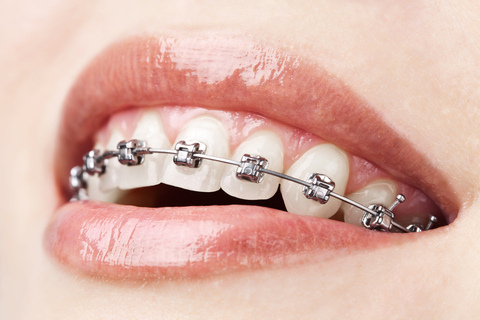
As you are undergoing orthodontic treatment, our team at Joel Martinez, DDS would like to point you to a helpful website. Our friends at the American Association of Orthodontists (AAO) have lots of important information about everything relating to braces, including myths and facts of orthodontics, tips for a better orthodontic experience, and cool webisodes about orthodontics.

Check out AAO today and feel free to contact us at our McAllen office if you have any questions.

Dr. Joel Martinez, Dr. Christopher Martinez, and Dr. Vanessa Martinez and our team at Joel Martinez, DDS hope this information helps you!

What is malocclusion?

August 16th, 2017

The term malocclusion refers to misalignment of teeth. You may have been born with malocclusion, so your teeth simply grew in crooked, or the misalignment and crowding of your teeth occurred over a period of time. Either way, not only can malocclusion pose cosmetic issues, but it can have a negative effect on your speaking and eating abilities as well.

Types of Malocclusion

Malocclusion encompasses multiple types and classifications of misalignment issues, including twisting or rotation of the teeth and molars that do not meet when you bite down. In some cases, the top front teeth are pushed outward in an upper protrusion.

In other cases, a misplaced midline results when the front top teeth don’t meet with the front bottom teeth. Transposition occurs when teeth protrude through the gums in a position where another tooth is supposed to be.

Practically any type of crowding or spacing issues, rotation or twisting of the teeth, or bite problem – including overbite, underbite, open bite, or crossbite – is included under the umbrella of malocclusion.

Malocclusion Classifications

There are three classifications of bite or misalignment problem.

  • Class 1 malocclusion: While the bite may be normal, the upper teeth overlap the lower teeth slightly. This is the most common type.
  • Class 2 malocclusion: Known as overbite or retrognathism, class 2 involves a severe overlap of the upper teeth and jaw over the bottom teeth and jaw.
  • Class 3 malocclusion: Known as underbite or prognathism, class 3 occurs when the lower teeth and jaw overlap the upper teeth and jaw. Thus, the lower jaw juts forward.

Causes of Malocclusion

The most common cause of malocclusion is genetics. However, there may be other causes, including the development of abnormally-shaped teeth, lost teeth, or impacted teeth; thumb sucking or overuse of a pacifier as a small child; having fillings or crowns that do not fit correctly; a serious injury that causes misalignment of the jaw; or developing a tumor of the mouth or jaw.

Treating Malocclusion

Orthodontic care at Joel Martinez, DDS with Dr. Joel Martinez, Dr. Christopher Martinez, and Dr. Vanessa Martinez is the main treatment available for malocclusion, which includes getting braces, Invisalign, or other corrective treatments. Treatment is ideal not just to have your smile improved, but because it makes the teeth easier to clean and maintain, lowers the risk of gum disease and tooth decay, and can even take pressure off the jaw and teeth.

Think about orthodontic treatment if you (or your child) display any signs of malocclusion. Early treatment of malocclusion during childhood can lessen expensive treatment later on.

What are the benefits of early orthodontic treatment?

August 9th, 2017

Parents usually have numerous questions about orthodontic treatment for their children. According to the American Association of Orthodontists, orthodontic treatment for children should start at around seven years of age. This allows Dr. Joel Martinez, Dr. Christopher Martinez, and Dr. Vanessa Martinez to evaluate the child’s existing and incoming teeth to determine whether or not early treatment might be necessary.

What is early orthodontic treatment?

Early orthodontic treatment, known as Phase One, usually begins when the child is eight or nine years old. The goal is to correct bite problems such as an underbite as well as guide the jaw’s growth pattern. It also helps to make room in the mouth for the permanent teeth to be properly placed as they come in. This will greatly reduce the risk of the child needing extractions later in life due to his or her teeth getting crowded.

Does your child need early orthodontic treatment?

There are several ways that you can determine whether your child needs early treatment. If you observe any of these characteristics or behaviors, you should talk to Dr. Joel Martinez, Dr. Christopher Martinez, and Dr. Vanessa Martinez.

  • Early loss of baby teeth (before age five)
  • Late loss of baby teeth (after age five or six)
  • The child’s teeth do not meet properly or at all
  • The child is a mouth breather
  • Front teeth are crowded (you won’t see this until the child is about seven or eight)
  • Protruding teeth, typically in the front
  • Biting or chewing difficulties
  • A speech impediment
  • The child’s jaw shifts when he or she opens or closes the mouth
  • The child is older than five years and still sucks a thumb

What are the benefits of seeking orthodontic treatment early?

Early orthodontic treatment is begun while the child’s jaw bones are still soft. They do not harden until the children reach their late teens. Because the bones are still pliable, corrective procedures such as braces work faster than they do for adults.

In short, early treatment at our McAllen office often allows your child to avoid lengthy procedures, extraction, and surgery in adulthood. Early treatment is an effective preventive measure that lays the foundation for a healthy, stable mouth in adulthood.

Home About Us For New Patients Orthodontic Treatments Wearing Braces About Orthodontics Contact Us Site Map