Our Blog

Five Tips in Caring for Your Braces During Orthodontic Treatment

January 30th, 2019

After getting your braces, it is important to know how to take care of your teeth in order to ensure that your braces stay intact and do their job so that your teeth are in top-notch condition after you complete your orthodontic treatment. Today, our team at Joel Martinez, DDS thought we would provide you with five tips you need to know to ensure you undergo successful treatment at our McAllen office.

Flossing
Flossing twice a day or after every meal can help you clean areas between teeth and other places a toothbrush can miss. We also recommend using a floss threader, which can be used to help you navigate safely around your braces and brackets. It is vital to floss twice a day, preferably after lunch and before bedtime to keep gum disease and tooth decay at bay.

Brushing
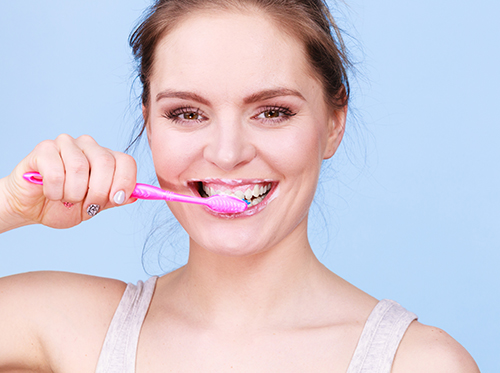
Teeth and appliances should be brushed after every meal and before bedtime using fluoride toothpaste and gentle, soft strokes. We recommend using an interdental toothbrush, which can help you clean the hard-to-reach areas under wires better than an ordinary toothbrush.

Using Elastics
This phase of orthodontic treatment requires cooperation and consistency on your part. If your orthodontist has prescribed elastics, make sure they are worn at all times, except when eating meals or brushing teeth. It’s important that you wear the correct size elastics and have extras in case they are misplaced. By failing to wear your elastics for even one day, you run the risk your teeth moving back toward their original position.

Addressing Damage to Your Braces
In case your appliances are damaged, we ask that you call our team at Joel Martinez, DDS immediately to set up an appointment.

Eat Friendly Foods
When undergoing treatment, there are certain foods you must avoid. Foods that are hard, sticky, chewy or sour can add months to your treatment time. These includes gum, caramels, taco shells, nuts, ice, chips or hard candies.

We hope that helps! If you have any questions, please give us a call at our McAllen office or ask us during your next adjustment appointment!

Early Orthodontics

January 23rd, 2019

Perhaps you are already planning for the years when your teenager will need orthodontic work. But hearing that your seven-year-old would benefit from orthodontic treatment? That might come as a complete surprise! It’s a recommendation with real benefits, though—early intervention can save children from tooth and bite problems now, and even simplify their future orthodontic care.

Treating young children for orthodontic problems is called “interceptive orthodontics.” When the permanent teeth start arriving, there might be problems with spacing, bite or protruding teeth. Often, treatment while the bones are still growing is the best way to prevent more serious problems later.

We recommend that your child have an orthodontic consultation with Dr. Joel Martinez, Dr. Christopher Martinez, and Dr. Vanessa Martinez around the age of seven. This exam is especially important for children who may have been thumb suckers or used a pacifier after the age of three, or if you notice obvious teeth, speech or bite issues.

  • Crowding and Spacing Issues

Teeth are arranged in two crescent shapes called arches. When the arch of your child’s mouth is small, the permanent teeth can become very crowded as they erupt. Formerly, teeth were removed to make more room. Now, early use of a palatal expander can enlarge the upper dental arch in order to help the permanent teeth come in without crowding. The need for future tooth extraction is reduced, and there is a better chance for correct spacing and alignment with early treatment.

On the other hand, when a child loses a tooth too soon, too much space left between baby teeth can also be a problem. The remaining teeth can shift, leaving the wrong place open for the adult tooth to come in. We might recommend a space maintainer so that there is no shifting of the teeth and there is room for the proper adult tooth to erupt in its proper spot.

  • Malocclusions (Bite Problems)

Some malocclusions, like a crossbite, can be caused by problems with jaw and facial structure. Again, we might recommend a palatal expander to help the upper arch of the teeth to fit properly with the lower jaw. Problems with overbite, open bite and other bite issues can also be addressed at this age if necessary. Early care can discourage TMJ (temporomandibular joint) disorders, reduce speech problems, and improve facial symmetry. 

  • Protruding Front Teeth

Teeth that protrude are much more likely to be damaged when playing or after a fall. Methods such as braces or appliances can reposition them and protect them from breaking or fracturing.

Many children will not need early intervention, and many can wait until they are older for orthodontic work. But if your young child has orthodontic problems that should be addressed, early intervention can do more than set the stage for successful orthodontics in the teen years. Talk to our McAllen team about what we can do for your child. Interceptive orthodontics can protect teeth, guide jaw and speech development, modify harmful oral habits and help to adjust bite problems before they become serious—when it comes to your child’s dental health, the best solutions are early ones!

How do braces move my teeth?

January 16th, 2019

Great question! Tooth movement is your body’s natural response to light pressure applied by braces over a period of time (usually two years). Braces work by using brackets that are glued onto your teeth; these brackets have small slots, and that is where Dr. Joel Martinez, Dr. Christopher Martinez, and Dr. Vanessa Martinez and our team insert orthodontic wires. These wires are held in place by small elastic ties that fit around the brackets. As time passes during your treatment, these wires apply pressure on your teeth, which sets in motion the movement of your teeth into their desired positions. Each of your teeth has a different size and shape to them, as do the brackets. Each bracket is custom-made for the particular tooth on which it’s supposed to fit.

Not long ago, orthodontists had stainless steel wires and that was about it. Today, however, we have a number of different high-tech wires at our disposal to move your teeth faster and more comfortably.

When you first get your braces on, the first wire or two will typically be very flexible, but still strong enough to apply a constant force on your teeth. As your teeth straighten out over time, however, Dr. Joel Martinez, Dr. Christopher Martinez, and Dr. Vanessa Martinez will use progressively thicker and firmer wires to help move your teeth in place for an ideal bite.

Every time you visit our office for an adjustment, we will swap out the wires in order to keep putting pressure on your teeth, which is why it’s so important for you to keep your adjustment visits during your treatment. Most adjustment appointments are scheduled four to eight weeks apart to give your teeth time to move.

As for rubber bands and elastics, most of our patients will need to wear elastics or rubber bands at some point during their treatments. These elastics typically go from one or more of the upper braces to one or more of the lower braces, and pull on your teeth to move them in the direction they need to move in order to achieve an optimal bite.

If you have any questions about wires, brackets, or elastics, or have any general questions about your treatment, please give us a call at our McAllen office.

The Many Benefits of Braces

January 9th, 2019

It’s true that orthodontic braces can give you a beautiful smile. But did you know there are other benefits of having braces than just getting perfectly straight teeth? Dr. Joel Martinez, Dr. Christopher Martinez, and Dr. Vanessa Martinez and our team want you to understand the other positives that can come out of having braces and relate to your oral health.

When teeth are crooked or crowded, it’s hard to brush and floss effectively. When there isn’t enough space in your mouth, bacteria and plaque can build up between these teeth. This can lead to serious issues like tooth decay and gum disease. When braces correct the spacing between teeth, and get rid of the tight spaces, patients are able to brush and floss more effectively and not miss essential areas of the mouth.

Surprisingly, braces can also address speech problems. They can shift problem teeth that may be causing embarrassing speech impediments. When an overbite or underbite gets adjusted, patients can pronounce certain words more clearly.

Spaces between teeth may also cause whistling, which braces can fix by closing off the gaps. Word slurring can also be improved with the help of braces by realignment of the jaw or teeth, which opens room for your tongue to move with greater ease.

Braces can also be helpful in supporting the bones and tissues in your mouth. Braces move periodontal ligaments by stretching the connective tissues and nerves. The bones naturally rebuild once they’re settled in their new spot.

Without support from poorly aligned teeth, gum tissue can erode. Braces help prevent erosion of the gums, and will alleviate pressure from the jawbone by fixing a bad bite over time.

If teeth are misplaced, they may not break down food effectively before it enters your stomach. Teeth aid with digestion when you can thoroughly chew your food. If your teeth are badly placed, braces can straighten them for optimal alignment. Once you can chew properly with the help of braces, your food will be more easily and fully digested.

If you have questions regarding braces and how they can help you, contact our McAllen office and set up a consultation appointment. Braces can help with many oral health problems, and may save you a lot of money and time in the future.

If you’re not sure whether braces would be worth your time or money, consider the benefits above, and how they add to the value of this treatment. You’ll be getting more than just a beautiful smile!


Home About Us For New Patients Orthodontic Treatments Wearing Braces About Orthodontics Contact Us Site Map