May 8th, 2019

We all want to live our healthiest lives. We know that part of keeping ourselves healthy is regular visits to our McAllen office for checkups and necessary dental work. And that dental work might require an X-ray. Should the amount of radiation in an X-ray concern us?
First, it is helpful to know that the radiation you are exposed to from a dental X-ray is very small. A set of most bitewing X-rays, for example, produces an amount of exposure about equal to the amount of background radiation we get from our normal surroundings in a typical day. We also take care to minimize your exposure even further by using specially designed equipment and protective shielding, and taking only necessary X-rays. If your child is very young, if you are pregnant, or if you have other health concerns, talk to us about the advisability of X-rays and whether they are essential to treatment.
Second, much of our careful general examination will be done visually. Dr. Joel Martinez, Dr. Christopher Martinez, and Dr. Vanessa Martinez can check for cavities and other problems and assess tooth and gum health. But sometimes, there are conditions which can’t be detected without an X-ray.
- Decay that isn’t visible in an oral exam—if a small cavity develops between teeth, or is hidden underneath a filling, an X-ray will catch it before more damage can take place.
- Infection—An X-ray will reveal infections such as abscesses that can damage both bone and tooth, and gum disease that has harmed bone and connective tissue.
- Orthodontic and periodontal issues—We might need an X-ray to determine the spacing and development of your child’s incoming teeth and maturing jaw structure, to properly create braces for adults or children, or to place an implant within the jawbone.
- If you are a new patient, it is helpful to have complete X-rays taken as a baseline of your current dental health and previous dental work. This baseline allows us to track tooth and jaw development, if necessary, and to evaluate any future changes that might be a concern. (If you have had X-rays taken in another office, we can help you have them transferred so we have a background of your dental history.)
Even though the radiation from a dental X-ray is minimal, be assured that we will never request any unnecessary procedure. When we recommend an X-ray, we do so to make sure there is no decay or infection threatening the health of your gums and teeth, and that we have the essential knowledge we need to treat any dental, periodontal, or orthodontic condition. Because we all want to live our healthiest lives—and part of that healthy life is both active and proactive dental care.
May 1st, 2019

The merry month of May also happens to be National Fitness and Sports Month, so take advantage of the warmer days to get outside and exercise! Bringing a friend, family member, or coworker with you when you go for a brisk walk during a lunch break can provide an opportunity to socialize as well as health benefits. If you need a little more motivation, here are some good reasons to stay active and fit.
Exercise provides:
- Improved stamina and energy as well as toned muscles and bone strength and density
- Improved circulation and breathing for a healthier heart and lungs
- Reduced risk for Type 2 diabetes and certain forms of cancer
- For older adults, regular exercise may help improve balance and reduce the risk of falls as well as improved cognitive abilities
Children and Teens
Children and teenagers spend long hours at their desks in school, on the computer, watching television, and involved in other sedentary activities that result in obesity and poor health later in life. Getting them engaged in school or community sports teams can help them form good life-long exercise habits. One important note: If they are participating in contact sports, Dr. Joel Martinez, Dr. Christopher Martinez, and Dr. Vanessa Martinez and our team at Joel Martinez, DDS recommend your kids wear an approved mouthguard to protect those valuable teeth from injury! Ask us for a proper fitting of your safety appliance during your next visit!
A gym membership is nice but not necessary to stay fit; try these easy ways to work some exercise into your daily routine.
At Home
- Take a friend along for company on a walk through your neighborhood.
- Pursue gardening or other yard work, including mowing or raking.
- Take your kids on a bike ride or have them push a baby stroller around the block.
Couch potatoes take note: simply moving from the sofa to the floor for some sit-ups, leg-lifts, or push-ups while you’re watching television can help you get in better shape in no time.
At Work
- Take the stairs instead of the elevator.
- Take exercise breaks for walks around the building or parking lot.
- Walk or ride a bike to work.
So what are you waiting for? Get moving!
For more information on exercise techniques, or to schedule an appointment with Dr. Joel Martinez, Dr. Christopher Martinez, and Dr. Vanessa Martinez, please give us a call at our convenient McAllen office!
April 24th, 2019
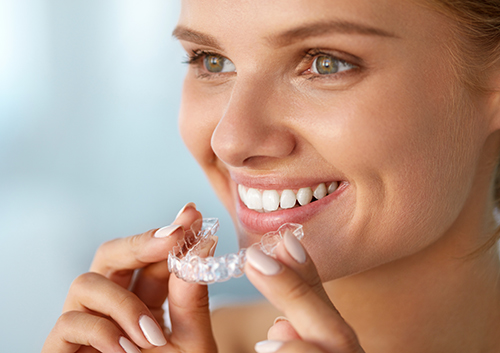
You may have a talent for home repairs. You may be able to rebuild your computer. You may even be able to put together a whole room of furniture armed only with flat-box kits and an Allen wrench. But, please—don’t try do-it-yourself orthodontics!
Now that generic clear aligners are available, you might consider giving them a try to save some money. But is straightening your own teeth really a good idea? Before you are tempted, let’s look more closely at the products and the dental science involved.
Invisalign®
- Invisalign clear aligners are used by orthodontists and dentists with experience in custom treatment for your smile. A 3D image of your teeth will be captured by the iTero Element® scanner. Using special software, your doctor can map out each projected shift in your teeth, and even show you a projection of your finished smile!
- Your Invisalign aligners will be tailored to fit your teeth precisely using the 3D scan and 3D printing. They are made from SmartTrack® material, a product specifically engineered for a perfect, comfortable fit. Invisalign aligners are even trimmed to fit your individual gumline to prevent irritation.
- When your first sets of Invisalign aligners arrive at our McAllen office, Dr. Joel Martinez, Dr. Christopher Martinez, and Dr. Vanessa Martinez will check for fit, answer any questions you might have about use and care, and let you know what to look for and what to expect. Your progress will be monitored with visits every six to eight weeks. (And for parents of teens, Invisalign aligners can offer blue “compliance indicators” to let you know they are being worn the 20-22 hours a day necessary for the best and fastest results.)
Generic Aligners
- You might be required to make a putty mold of your own upper and lower teeth, which is not the easiest thing to do well, and to take selfies of your teeth.
- The aligners will be sent to you in the mail. They are generally made of hard plastic with generic gumlines. There will be no one to tell you if the aligners fit properly.
- They are sometimes less expensive because there is no in-person medical supervision. A dental professional working for the company will look at the model created from molds you submit, and recommend a series of aligners to correct the problems he detects by looking at the model and your selfies. This supervisor will not be able to assess the overall dental health of each patient to make sure teeth and gums are healthy and ready to start treatment, and will not be able to tell if the teeth are moving properly or improperly once the aligners are in use.
Finally, while generic aligners may potentially have some success in minor tooth straightening, they are not created to deal with complex bite issues or malocclusions. In fact, using generic aligners with no supervision can cause more serious dental problems than a patient started with.
Sure, sometimes a do-it-yourself project turns out well. But your teeth and bones are too important for home improvement. When it comes to creating a beautiful, even smile and balanced, comfortable bite while making sure of your dental health, it’s always best to trust a professional like Dr. Joel Martinez, Dr. Christopher Martinez, and Dr. Vanessa Martinez to provide you with gentle, tested, and successful care!
April 17th, 2019
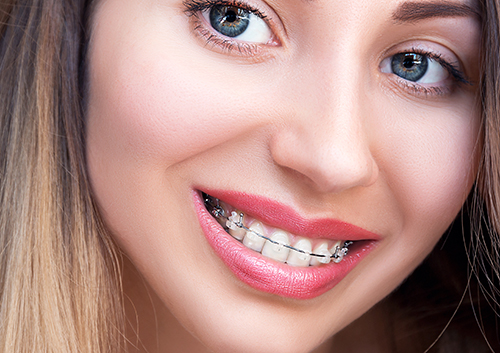
Congratulations! You have made the decision to get orthodontic treatment at our McAllen office. Now it’s time to choose among your various appliance options. Traditional metal brackets and wires, lingual braces, a series of aligners—they all have positives to recommend them. And for some people, ceramic braces are the clear favorite.
Ceramic braces work like regular metal braces. Brackets are bonded to the front of each tooth, and rubber bands surrounding the brackets hold the arch wire that gradually moves the teeth into alignment.
Ceramic braces, however, use brackets made of clear or tooth-colored ceramic or porcelain which blend beautifully with the color of your tooth. The elastic ligatures, or rubber bands, can be chosen to match the brackets or your enamel. There are self-ligating ceramic brackets which don’t use bands at all. Technology is even working on ways to make the arch wire less visible! The end result is braces that are almost undetectable.
If you want a less obvious appliance for professional or personal reasons, talk to us about ceramic braces. As always, there are other factors to consider before you decide, which we will be happy to discuss with you.
- Ceramic brackets are very strong, but they are still more brittle than the metal model. If you play a contact sport, these might not be for you. (But whatever braces you choose, please wear a mouthguard when playing sports.)
- Ceramic braces might not be ideal depending on the amount of alignment and bite correction that is needed. They might also take a bit more time to bring your teeth into alignment. We will be able to tell you if ceramic braces will work for you and if they might require a longer period to move your teeth to their perfect position.
- Brackets can sometimes be somewhat larger (though this isn’t always the case), and, because they can be abrasive, are often recommended for upper teeth only. This way, the lower teeth will not impact, or be impacted by, contact with the upper teeth.
- Oral hygiene can trickier with ceramic braces. Although today’s brackets aren’t as prone to staining, you still need to be careful to brush away the plaque that can accumulate around the brackets. And the bands are susceptible to staining by the usual suspects—coffee, tea, colas, blueberries, or any strongly colored food or beverage.
- Costs will differ depending on the treatment method you choose. Talk to us about cost comparisons with other orthodontic treatments.
Ceramic braces, because they are so much less visible, are a popular orthodontic option, especially for older teenagers and adults. If you are interested, talk to Dr. Joel Martinez, Dr. Christopher Martinez, and Dr. Vanessa Martinez about this effective way to straighten your teeth—discreetly. Ceramic might be the clear solution for creating your lasting, beautiful smile.